
Why Nigeria Must Rethink How We Care for Those We Love
Quick storytime!
In 2019, Mrs Adeyemi found herself in a dilemma familiar to many Nigerian families. Her 72-year-old mother had just suffered a minor stroke. The hospital discharged her early, too early, she felt, but the doctors insisted she could continue her recovery at home.
So, the family held a meeting. Who will stay with Mama?
Her siblings looked away. Everyone had work, children, commitments, and bills.
Mrs Adeyemi quit her job to step in.
Six months later, she was exhausted, financially strained, emotionally depleted, and her mother’s condition had barely improved.
This story is not unusual. It reflects the quiet crisis happening in households across Nigeria:
Love is abundant, but capacity is limited.
So, the question becomes unavoidable:
Who provides better care: family members or professional caregivers?
And is this even the right way to frame the conversation?
The following explores the strengths and limitations of both sides, and examines why the future of care in Nigeria lies not in rivalry, but in partnership.
The Strengths Family Members Bring
1. Familiarity and Emotional Safety
No one understands an older adult’s quirks, preferences, and history like their family. This familiarity creates emotional stability—an essential ingredient in recovery and daily wellbeing.
2. Cultural and Spiritual Alignment
From prayer routines to food preferences to communal living, family-led care aligns naturally with Nigerian traditions and values.
3. A Sense of Honour and Obligation
For many, caring for a parent is not just a responsibility; it is an identity. Families feel pride in “being there,” and older adults often prefer being cared for by “their own people.”
But love and goodwill, while powerful, cannot always override real-world constraints.
Where Family Care Begins to Struggle
1. Lack of Training
Most family caregivers don’t know how to safely lift a patient, manage medication schedules, prevent bedsores, or recognise early warning signs of deterioration.
This gap often leads to accidental harm—even when intentions are pure.
2. Burnout Is Real
In Nigeria, caregiving often falls on one person, usually a woman.
She juggles the household, the children, a job, church or mosque duties—and then 24/7 caregiving.
The emotional toll is immense.
3. Time Constraints
Modern life has changed.
We now live in cities, work long hours, and spend hours in traffic.
The “full-time family caregiver” is no longer realistic for most Nigerians.
4. Strained Relationships
Too much responsibility placed on one family member can create resentment and unhealthy family dynamics.
In truth, families provide love—but not always care in the clinical sense.
What Professional Caregivers Do Better
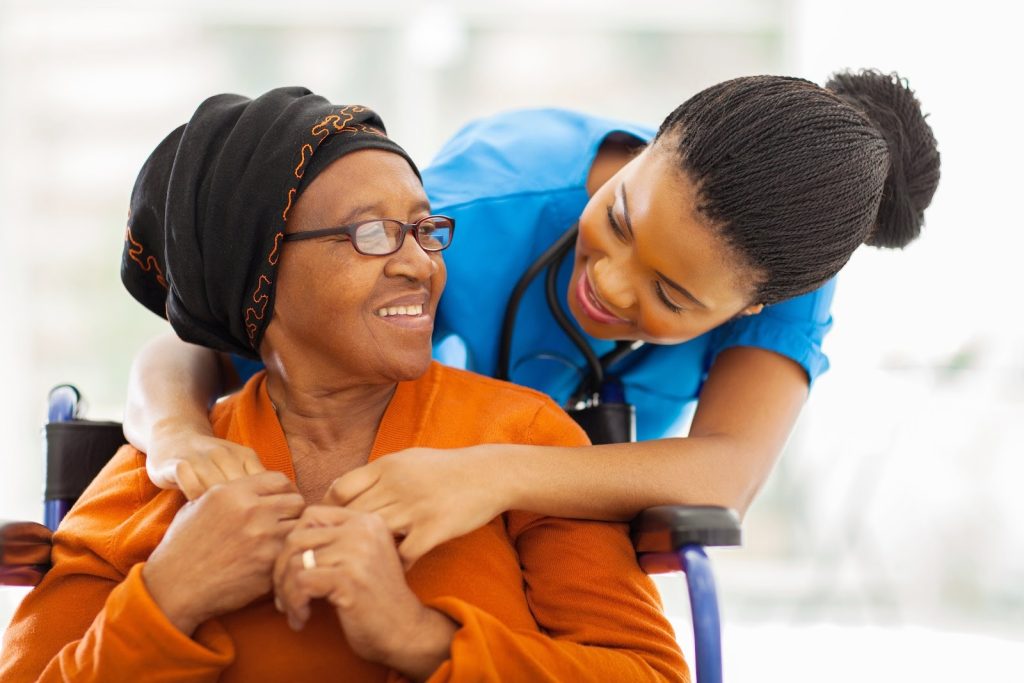
1. Training and Clinical Awareness
Professional caregivers understand mobility support, hygiene care, nutrition management, fall prevention, dementia behaviour patterns, stroke recovery routines, and more.
They are trained to notice what others miss—a small wound, a change in appetite, a shift in breathing.
2. Consistency and Routine
Caregiving is not a one-off task—it is a structure.
Professionals maintain schedules, document progress, and ensure daily tasks are done safely and correctly.
3. Reduced Risk
Trained caregivers reduce the likelihood of falls, infections, medication errors, and neglect.
This improves quality of life and can even extend lifespan.
4. Relief for the Family
By taking over the physical burden, professionals allow family members to take on the emotional role—visiting, bonding, praying together, and being present without breaking down.
Professional Care Is Not Perfect, and That Matters Too
In challenging professional caregiving, many Nigerians express valid concerns:
- “Will she treat my mother well?”
- “What about trust?”
- “Isn’t it too expensive?”
These concerns are born from experience. Many unregulated, untrained “house helps” have been mislabeled as professional caregivers. That is not care. That is improvisation.
Professional home care, when properly trained, vetted, and supervised, is very different from simply hiring domestic help.
The Best Care Isn’t Either-Or. It’s Both.
There is a false belief in our culture that hiring a caregiver means a family has “abandoned” their loved one. This is simply untrue.
Professional care is not a replacement for family care. It is a support system for family care.
Imagine this model:
- The caregiver handles daily routines, hygiene, mobility, safety, meals, and medication reminders.
- The family focuses on companionship, emotional presence, decision-making, and preserving dignity.
The result? Better outcomes. Fewer accidents. Less guilt. More peace.
In fact, research from home care and geriatric studies consistently shows that combining professional care with family engagement leads to:
- Higher recovery rates
- Lower stress levels
- Improved emotional well-being
- Better long-term independence
Families bring heart. Professionals bring skill. Together, they bring dignity.
Reframing “Neglect” and “Support” in Nigerian Culture
In some Nigerian households, hiring help is seen as failing your responsibilities. But the truth is:
It is not neglect to ask for help. It is wisdom.
A person receiving proper care is not neglected. A family preserving its emotional health is not neglectful. A society acknowledging that caregiving requires skill is not abandoning tradition.
In fact, true neglect often occurs when overwhelmed families try to carry more than they can manage on their own.
Care is not defined by who does the lifting. It is defined by whether the person is safe, clean, comfortable, respected, and truly looked after.
So, Are Professional Caregivers More Effective?
In most cases, yes, for the tasks that require training, alertness, safety skills, and routine.
However, are they more emotionally important than family?
Never.
Professional caregivers are most effective when they operate as part of a family care ecosystem, not a competitor to it.
The future of Nigerian home care is a collaboration:
Family for connection.
Professionals for competence.
Together for dignity.